
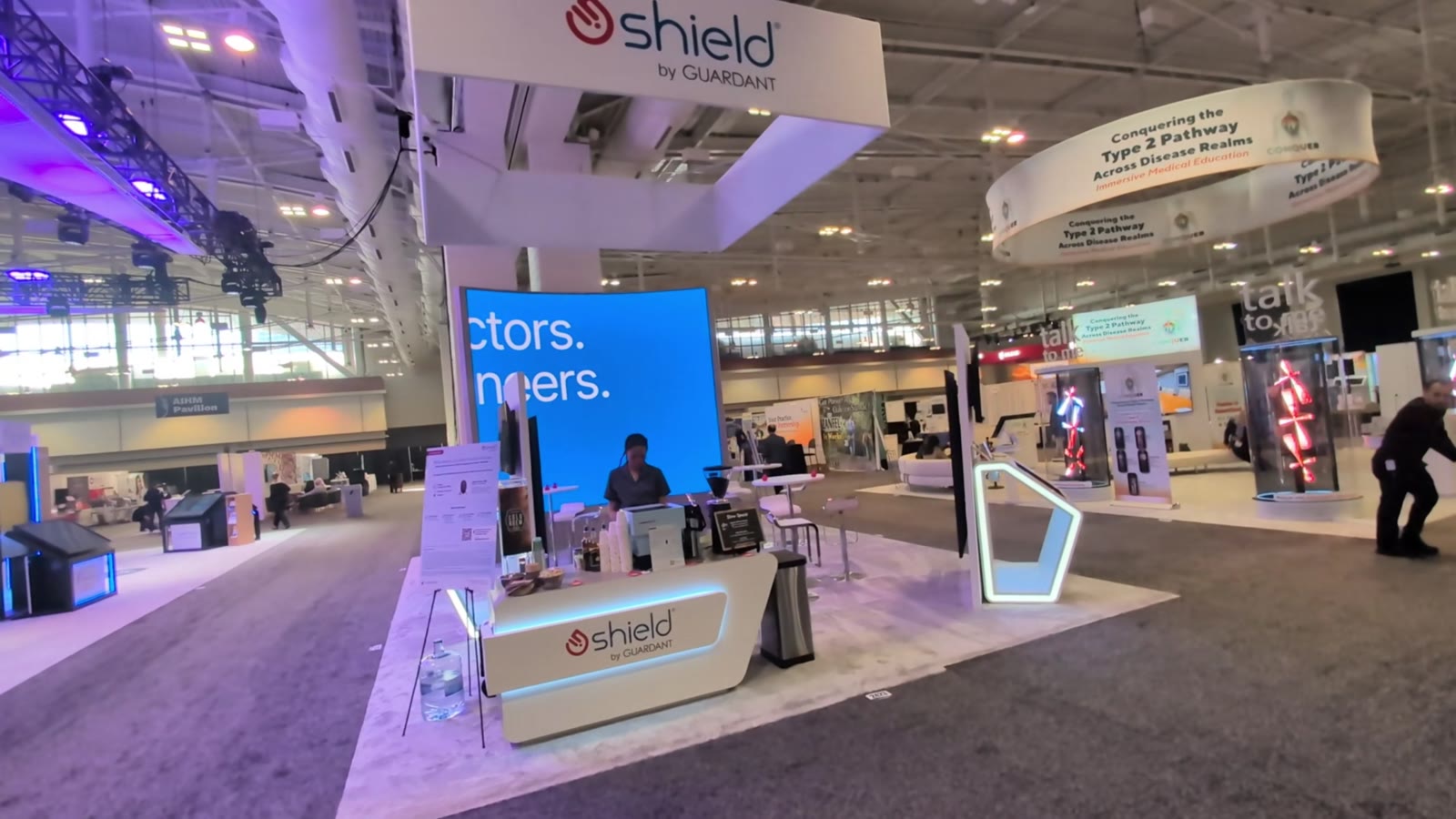
Mixing 500 x 1000mm and 500 x 500mm LED tiles saved us real time on a custom curved wall build.
The wall is roughly 13 ft wide by 11.5 ft tall, with a curve that was custom fitted to the structure. Most of the field is 500 x 1000mm tiles. Every full-size tile replaces two 500 x 500mm tiles, which means half the mounting points, half the data and power jumpers, and half the seams to align. On a curve, fewer seams means fewer places for the line to drift.
The 500 x 500mm tiles handle the edges, the corners, and anywhere the structure doesn't land on a 1000mm increment. We don't cut the frame to fit the screen. The screen fits the frame.
Color matching is the real test
Mixing tile sizes only works if everything looks like one surface. Here is what we do to get there:
- Keep all tiles from the same product line and batch whenever possible.
- Check that every tile is on the same firmware and calibration data.
- Run full white, full gray, and the primaries on the wall before content goes up.
- Look at it from the angles guests will actually see, not just straight on. A curve changes how the wall reads from the sides.
Everything ran through a Novastar MX40 processor, so one set of brightness and color settings applied across the whole wall. Once it was calibrated, there was no visible difference between the two tile sizes.
The takeaway
If the structure is custom, design it around the tile sizes early. Build for the 500 x 1000mm tiles, plan the 500 x 500mm tiles for the transitions, and the install goes faster and cleaner.
Planning a curved wall or a custom LED build? Book a free walkthrough and we'll work out the layout with you before anything gets built.